

Gigabyte M32U gaming monitor review
Our Verdict
The Gigabyte M32U gaming monitor costs a lot but offers a lot in render, though in certain key areas competing models give information technology a run for its money (and yours).
For
- Proficient motion picture quality
- Solid drove of gaming features
Against
- Expensive
- Some customization may be required to optimize gameplay advent
- Mediocre built-in speakers
Tom'south Guide Verdict
The Gigabyte M32U gaming monitor costs a lot but offers a lot in return, though in certain key areas competing models give it a run for its money (and yours).
Pros
- +
Practiced picture quality
- +
Solid collection of gaming features
Cons
- -
Expensive
- -
Some customization may be required to optimize gameplay appearance
- -
Mediocre built-in speakers
Gigabyte M32U gaming monitor: Specs
Screen Size: 32 inches
Resolution: 3,840x2,160
Refresh Charge per unit: 144 Hz
Inputs: DisplayPort, HDMI, USB Type-C, USB Type-A, iii.5 mm audio
Dimensions: 23.04 by 28.16 by 9.62 inches (with stand up)
The Gigabyte M32U gaming monitor is loaded with everything dice-hard gamers may want and expect from their displays—except the traditional gamer aesthetic. This is a 32-inch monitor that can display resolutions up to 4K, is loaded with intriguing capabilities, and bears a towering price of $799.99 that belies its (relatively) downscale looks. Information technology too has a close, personal relationship with the Gigabyte Aorus FI32U gaming monitor, which dazzles with its characteristic set and film quality merely blinds with its price (a total $200 higher).
That may affect the calculus a bit, though what the M32U lacks in comparing to that ane is likely to have a greater impact. The brusk version of the story is that this is a worthwhile brandish for gamers who want to broach 32-inch, 4K territory, and won't heed having to give up a few things to get it (and salvage some cash).
Gigabyte M32U gaming monitor review: Design
Many gaming monitors (including the FI32U) are designed to hold their ain against gaming desktops, with assuming (even haphazard) looks, wacky angles in the plastic molding, retina-searing RGB lighting schemes, and then on. Not then the M32U, which looks similar… uh… a monitor. Ane that'southward definitely on the big side, measuring 23.04 x 28.16 x 9.62 inches and weighing just under 23 pounds with the stand attached, but a monitor even so.
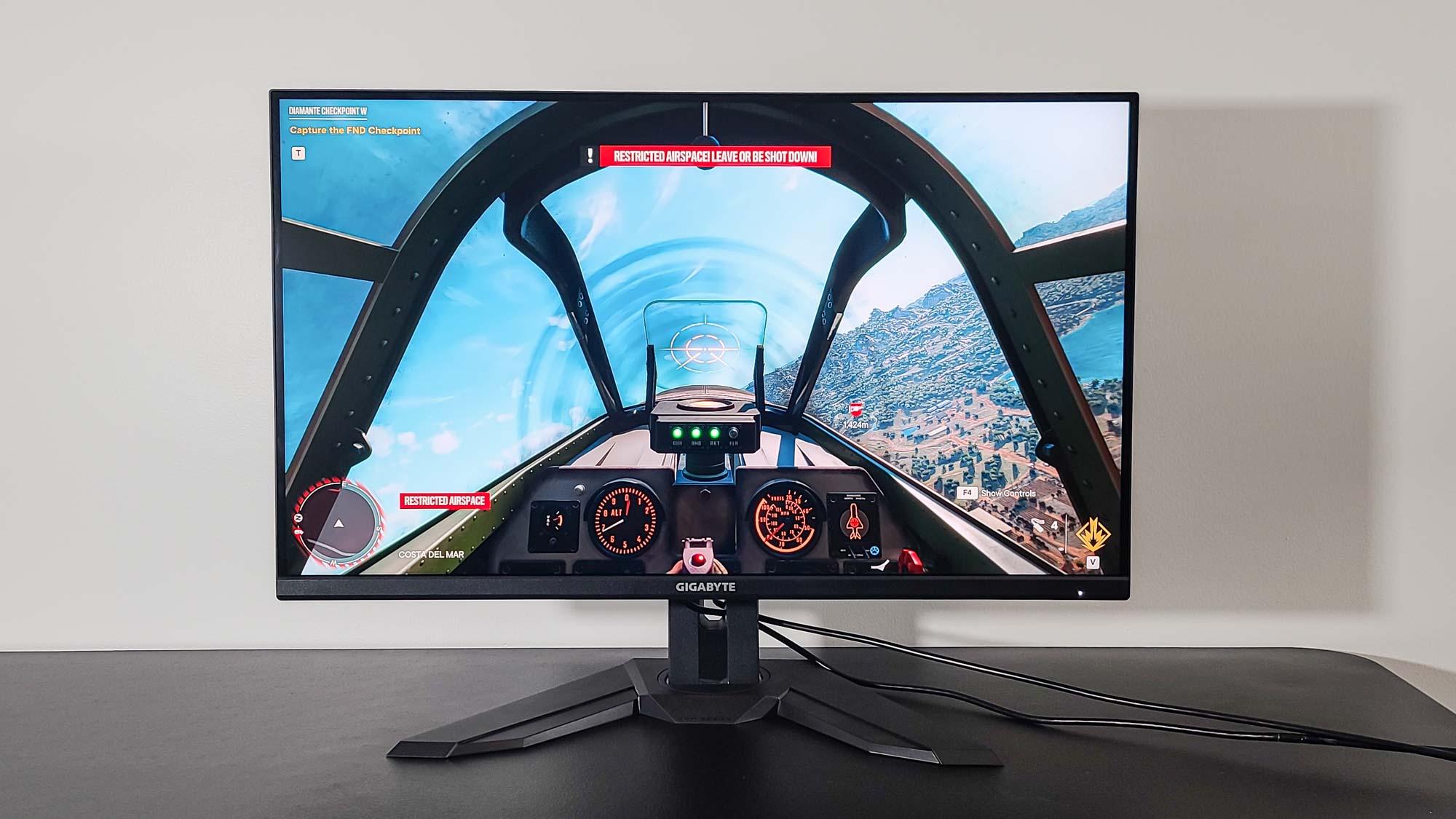
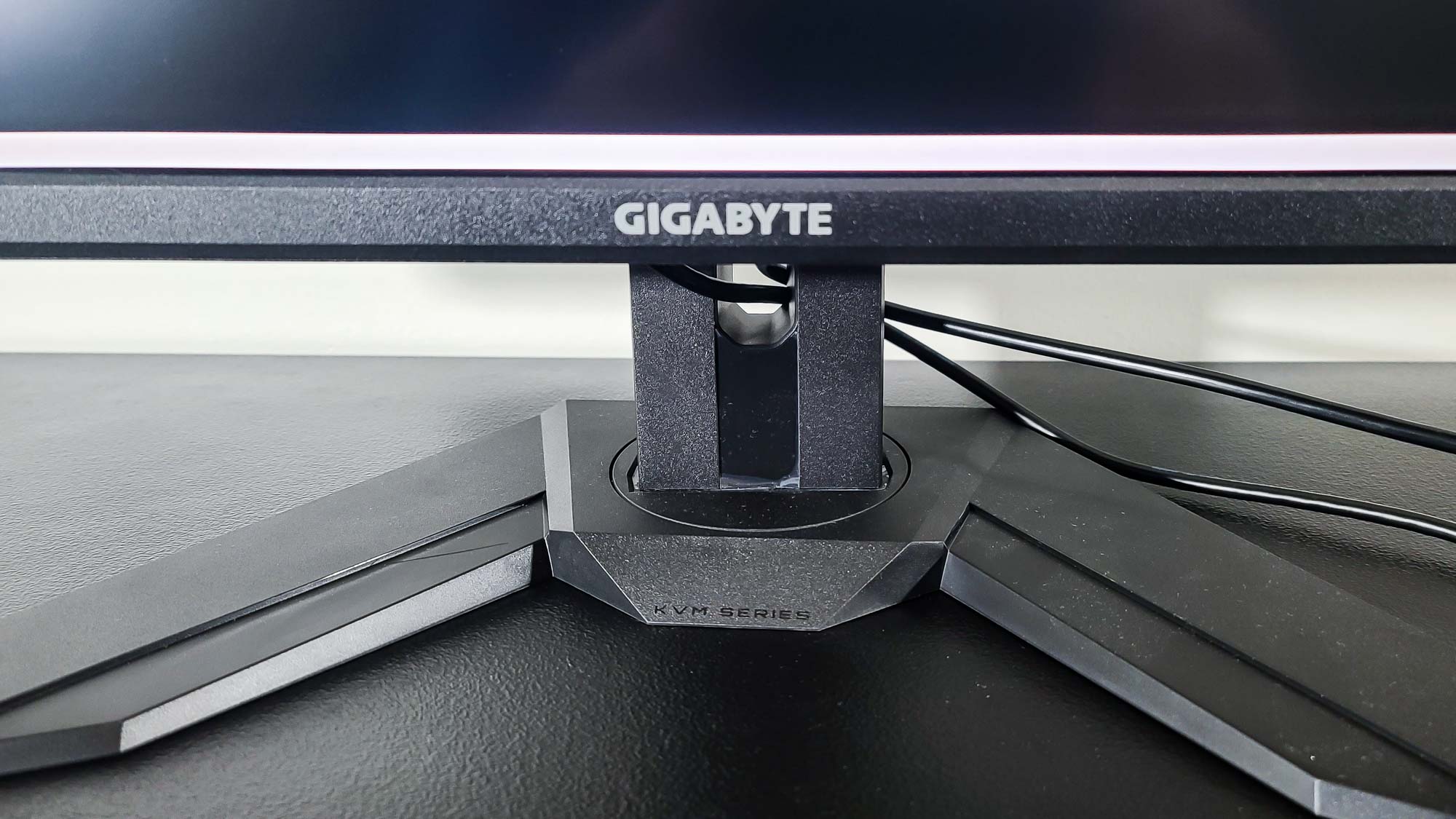
The setup is the expected all blackness, just the two-slice stand up is thoroughly laid back in its execution, with a hole at the bottom of the shaft for routing cables and not a lot else. (The stand clicks into place on the back of the screen — quite a scrap more than hands than did the FI32U, for the tape — or y'all can apply the 100x100mm VESA mounting holes to put the screen on the wall or monitor arm.) The only illumination comes from the Power lite in the lower-right corner. The bezels are thin on the top and sides (less than ane-8th inch) and slightly wider on the lesser (just over three-quarters inch), and aside from the Gigabyte logo dead middle on the latter, there'south otherwise no visible ornamentation. Think of it equally a business monitor for gaming.
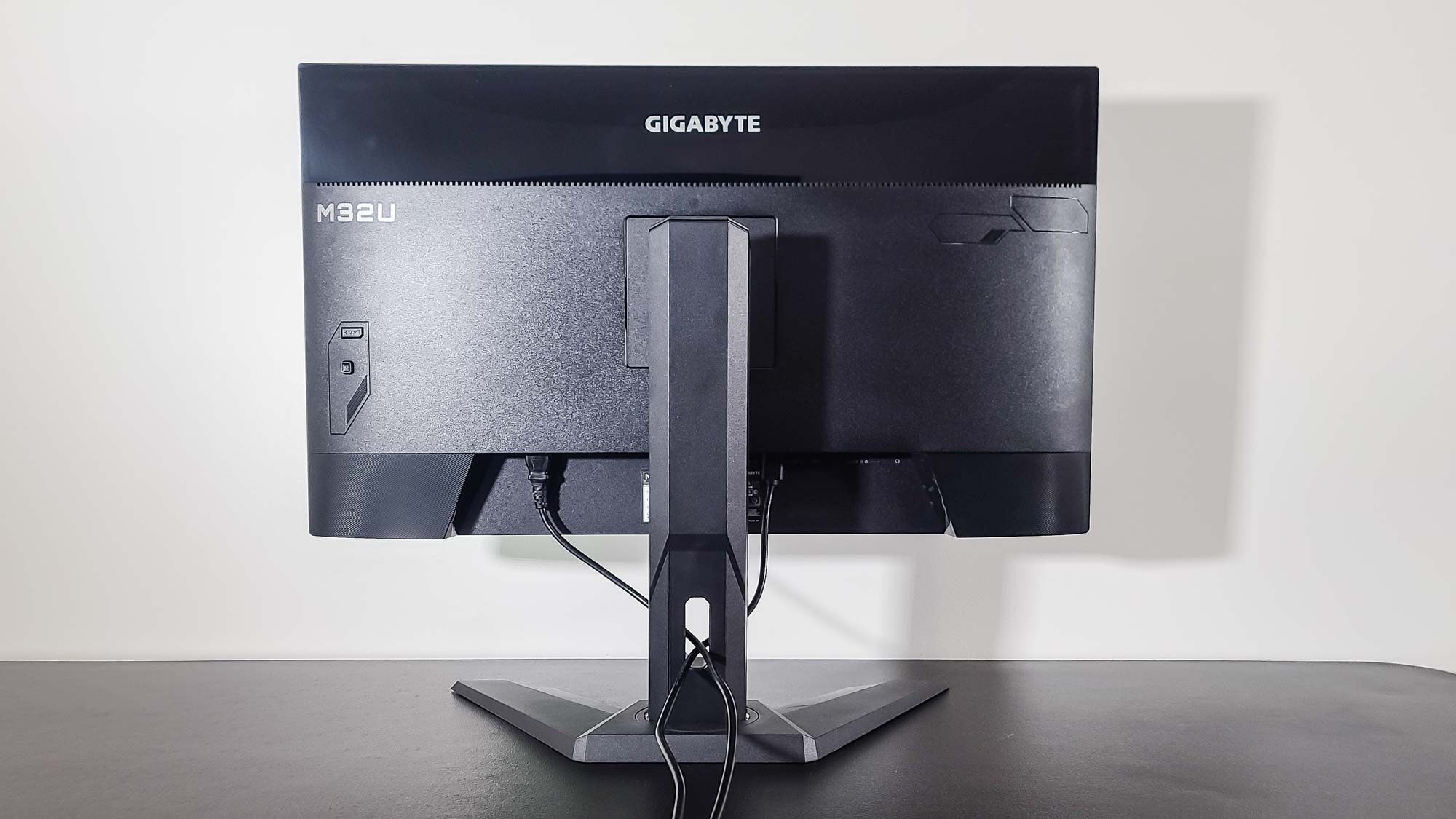
That said, it can't do everything y'all might desire from that kind of display. Dissimilar the FI32U, this screen doesn't pivot on the stand, and so you'll have to be happy playing your games and using Windows applications strictly in landscape mode. Only the stand does allow other movement functionality, so yous can raise or lower the screen across a span of more than than 5 inches, tilt it backward -5 degrees or forward upwards to twenty degrees, or swivel information technology 30 degrees both left and right.
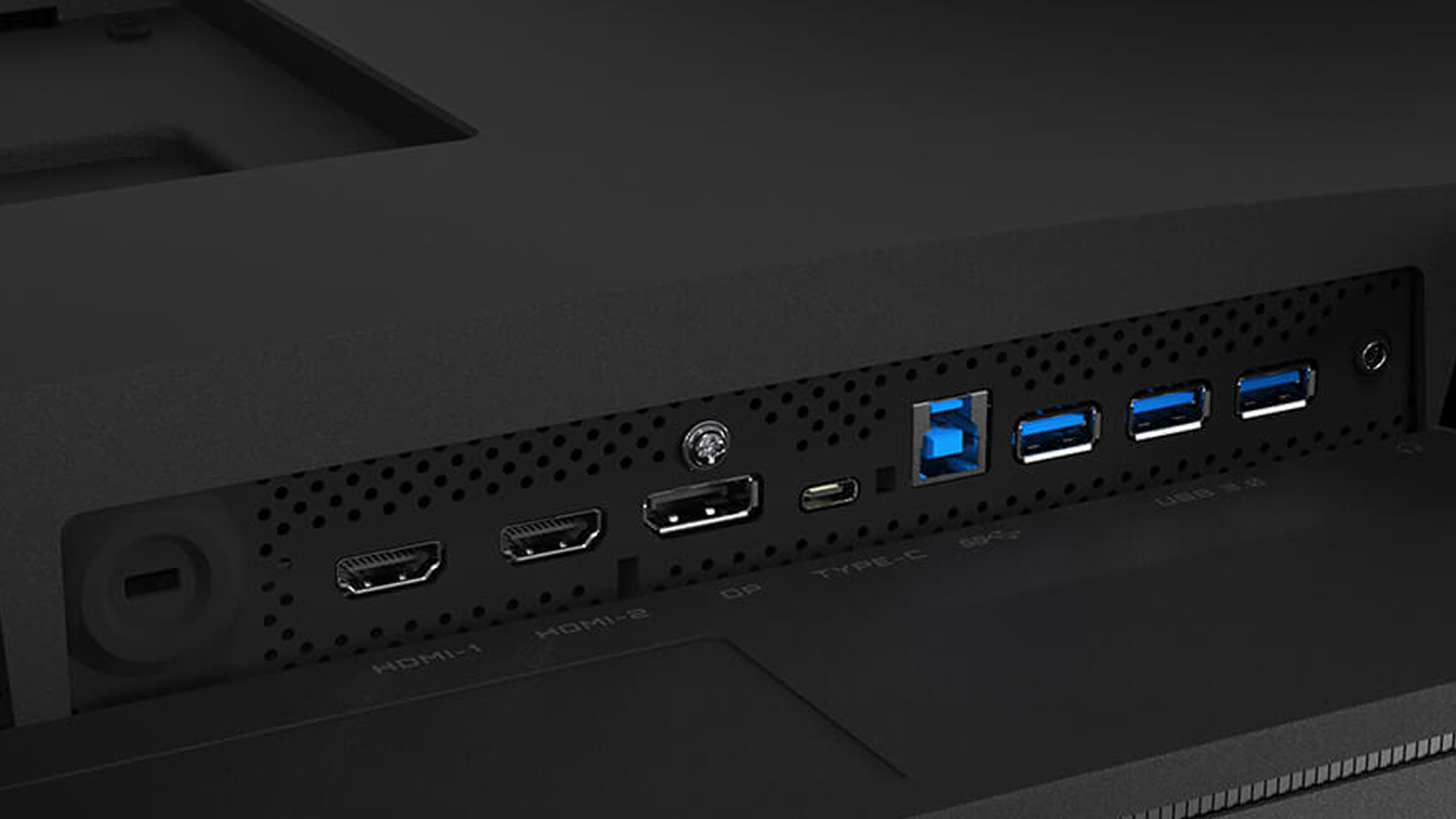
There's no shortage of ports on the M32U. You get two HDMI ii.ane, 1 DisplayPort 1.4, five USB ports (with 1 Type-C, one Type-B, and iii Type-A—one more than than on the FI32U), and a headphone jack.
One major departure from the FI32U is that the M32U likewise has 2 built-in 3-watt speakers, then you don't need a separate audio system for your gaming desktop. The power jack is off-center to the correct. On the right of the dorsum panel are the monitor'south ii buttons: a combination Power button and carte du jour-navigation stick and a dedicated button for activating the KVM feature, which makes it possible for you to display the screen of your USB Blazon-C–compatible mobile device on the monitor or control it with your keyboard and mouse.
Gigabyte M32U gaming monitor review: Screen
The M32U has half-dozen preset picture modes, plus 3 "Custom" modes intended for containing your preferred settings for a particular genre or even a particular game. We didn't bother testing those, but the others all revealed accurate color reproduction and potent color gamut coverage, besides as satisfying brightness. As measured with our Klein K10-A colorimeter and DisplayCal software, the default mode (Standard) registered a 0.22 value for the M32U'southward Delta-East (the departure between the color every bit sent from the source and the color displayed, with lower numbers ever better); just Reader mode, with a 0.twenty result, was more accurate, but all modes were in the same ballpark. The FI32U got a touch lower on its Reader mode (0.17), simply its Standard mode was neck-and-neck (0.23).
Standard mode also covered 124.6% of the sRGB color gamut and 88.3% of the wider DCI-P3 gamut, in each example among the tiptop scorers of the monitor's modes. These results weren't far off from what nosotros saw with the Aorus FI32U. That monitor's Standard mode covered 132.viii% of the sRGB gamut and 94% of the DCI-P3 gamut, for example, merely overall its colour performance was on par. (The FI32U does, withal, have two moving picture modes the M32U doesn't: Green, its default, designed for lower power usage, and VS style, with 141.1% sRGB gamut coverage and an impressive 99.nine% DCI-P3 coverage.) Another 32-incher nosotros like, the Dell S3220DGF gaming monitor, covers a similar 133% of the sRGB gamut and boasts a Delta-Eastward of 0.twenty.
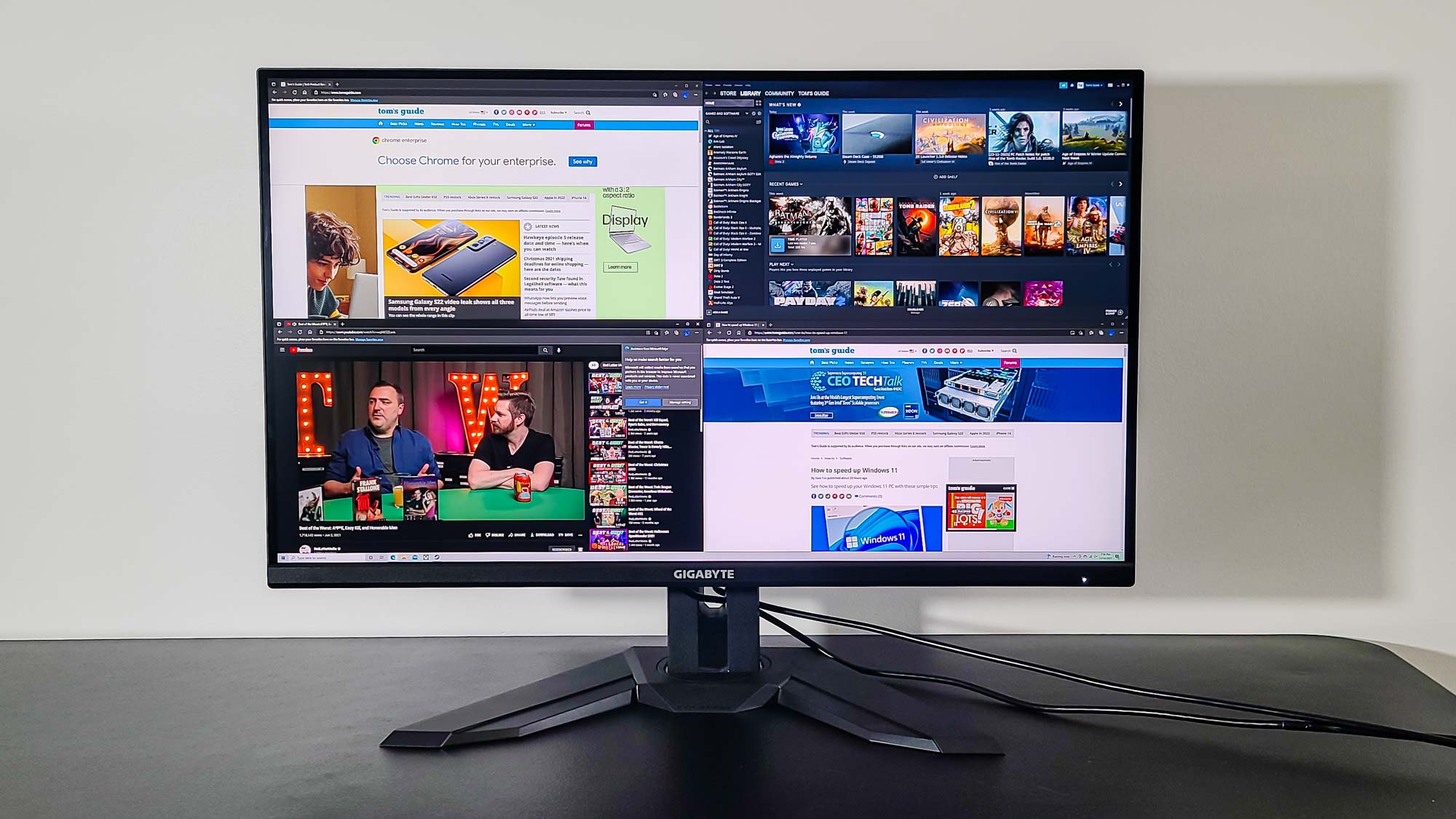
The M32U tin also get plenty brilliant, though, as with the FI32U, there was some detectable departure between the moving picture modes. The M32U's brightest mode is RTS/RPG, which averages 323 nits across the whole screen (every bit measured with the K10-A and Klein's own ChromaSurf software), whereas that was comparatively dim on the FI32U (287 nits). Standard style between the two was pretty shut, with the FI32U having a slight edge 322 nits versus 319 nits), but nigh of the M32U'south modes hung around 320 nits, a hair above the Dell S3220DGF. The one major exception was Reader mode, at 284 nits (brighter than the FI32U's 263 nits).
You only get one HDR mode with the M32U, and it triggers automatically when y'all supply information technology with appropriate content. Measuring most 480 nits on our HDR effulgence test (which uses 10-Rite and SpectraCal colorimeters and Calman display calibration software), information technology's a nice jump from SDR, though below the FI32U'southward brightness (505 nits). Both monitors covered approximately equal swaths of the BT.2020 and UHDA-P3 HDR color gamuts, too, proving that content within any dynamic range is probable to look skillful.
Gigabyte M32U gaming monitor review: Gaming operation
Everyone's personal sweet spot for the relationship between monitor size and resolution is dissimilar, but in general, the all-time balance for 4K hits at 27 inches and above. Yes, this ways you lot'll need a lot of room on your desk-bound (or the wall it's next to), but it likewise means you won't have to squint at Windows interface elements and that games volition look as sharp as they can (and as your graphics and computing hardware allow). The M32U makes the well-nigh of the space information technology offers.
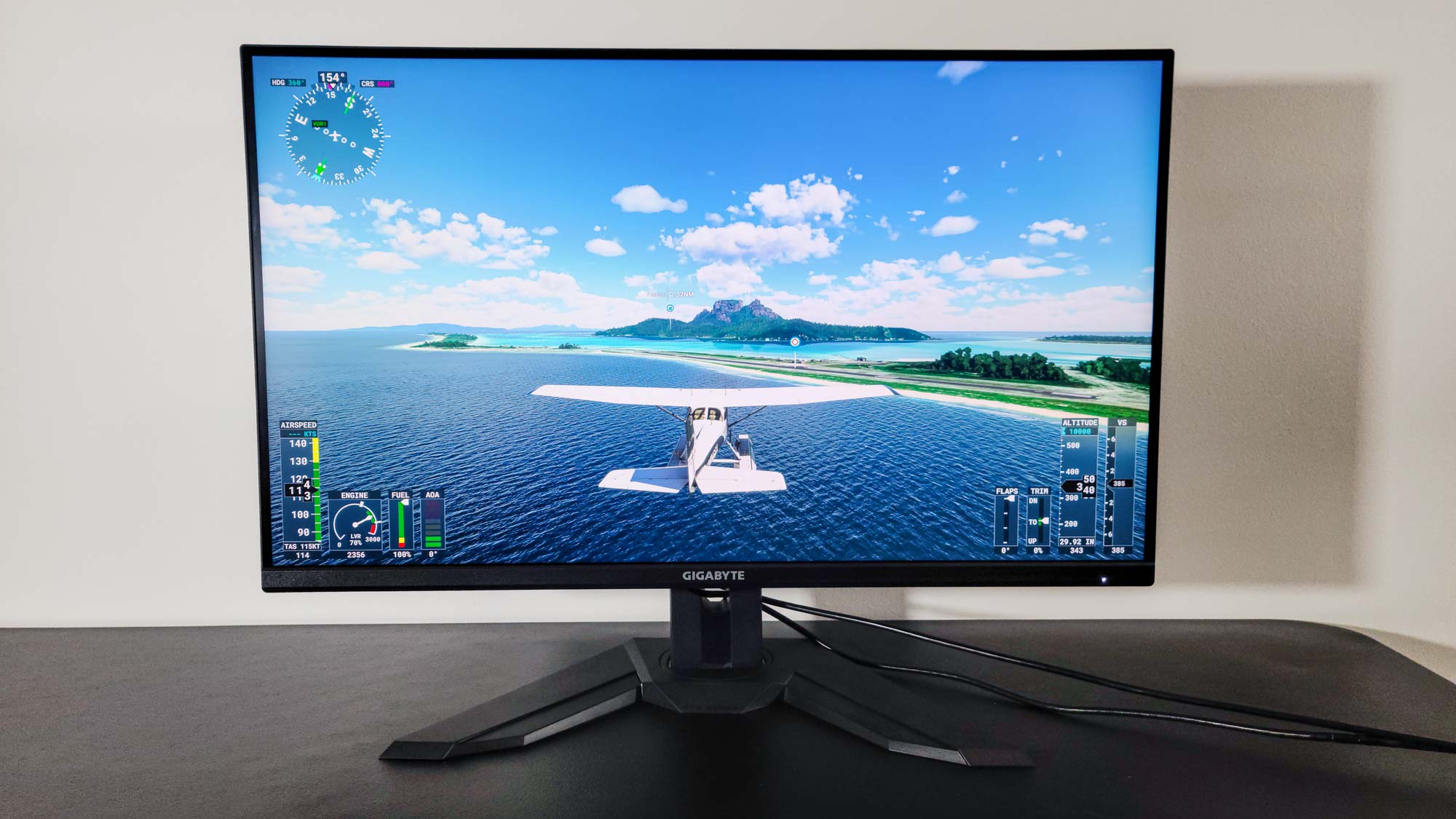
Games across a variety of genres came off well in most picture modes. Standard was a flake on the dark side, FPS the visibly brightest, and sRGB a particularly good residue between the extremes; the only manner you're likely to want to stay abroad from in regular play is Reader, which gave every game we tested it with a sickly yellow cast (though it's not actually intended for gaming use anyhow). Information technology was a please to be able to crank upwards the resolution and the graphical details in Microsoft Flight Simulator and enjoy in the sumptuous details information technology renders inside the existent-world vistas you fly through. And the sparkling golds of the embankment sands and the lush greens of the jungle that constitute so much of the Caribbean clime of Yara, where Far Cry 6 is prepare, transporting you lot right into the blaze of that hotly contested state. These games and others didn't pop quite as much equally on the FI32U, but they e'er looked good.
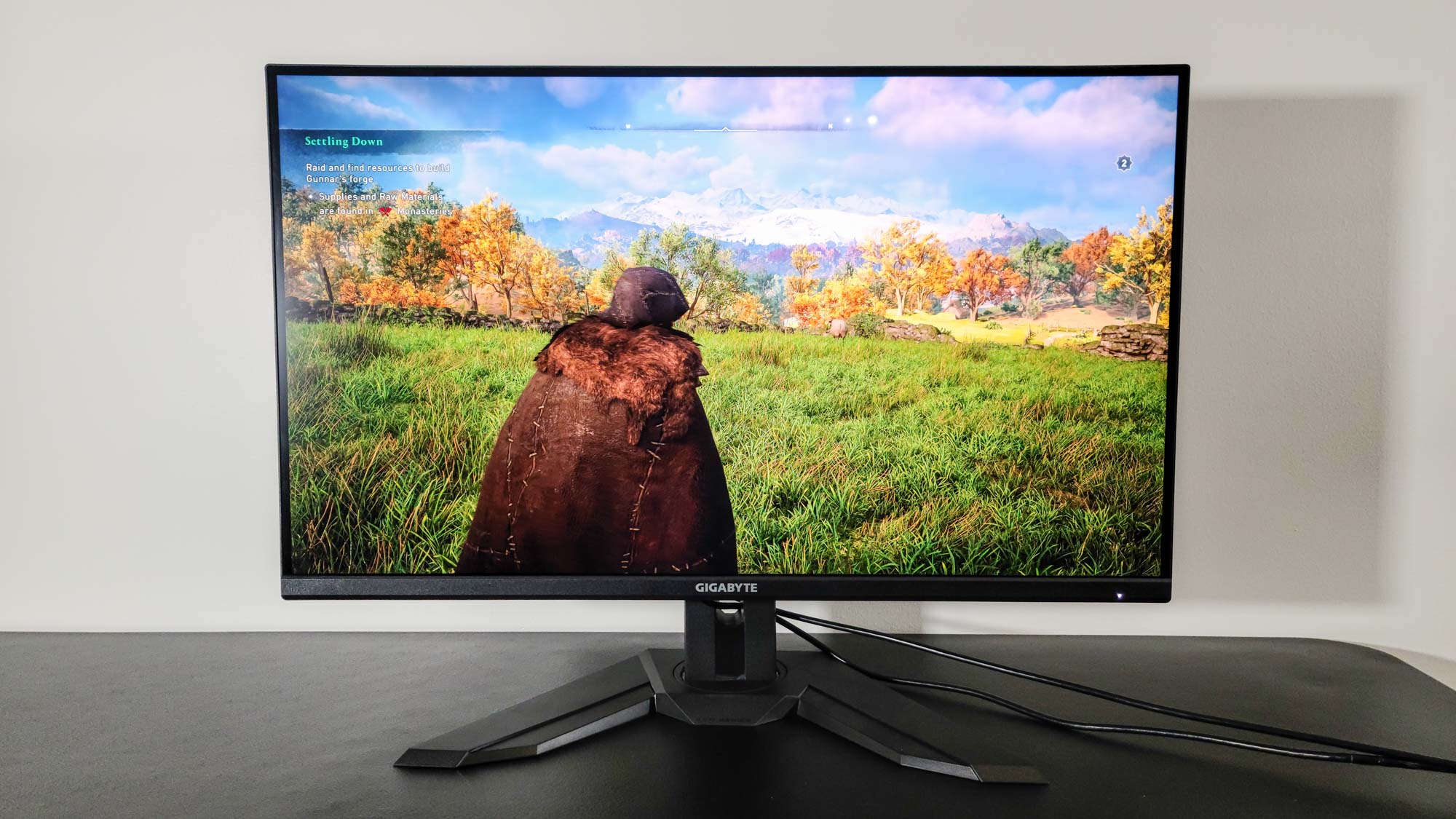
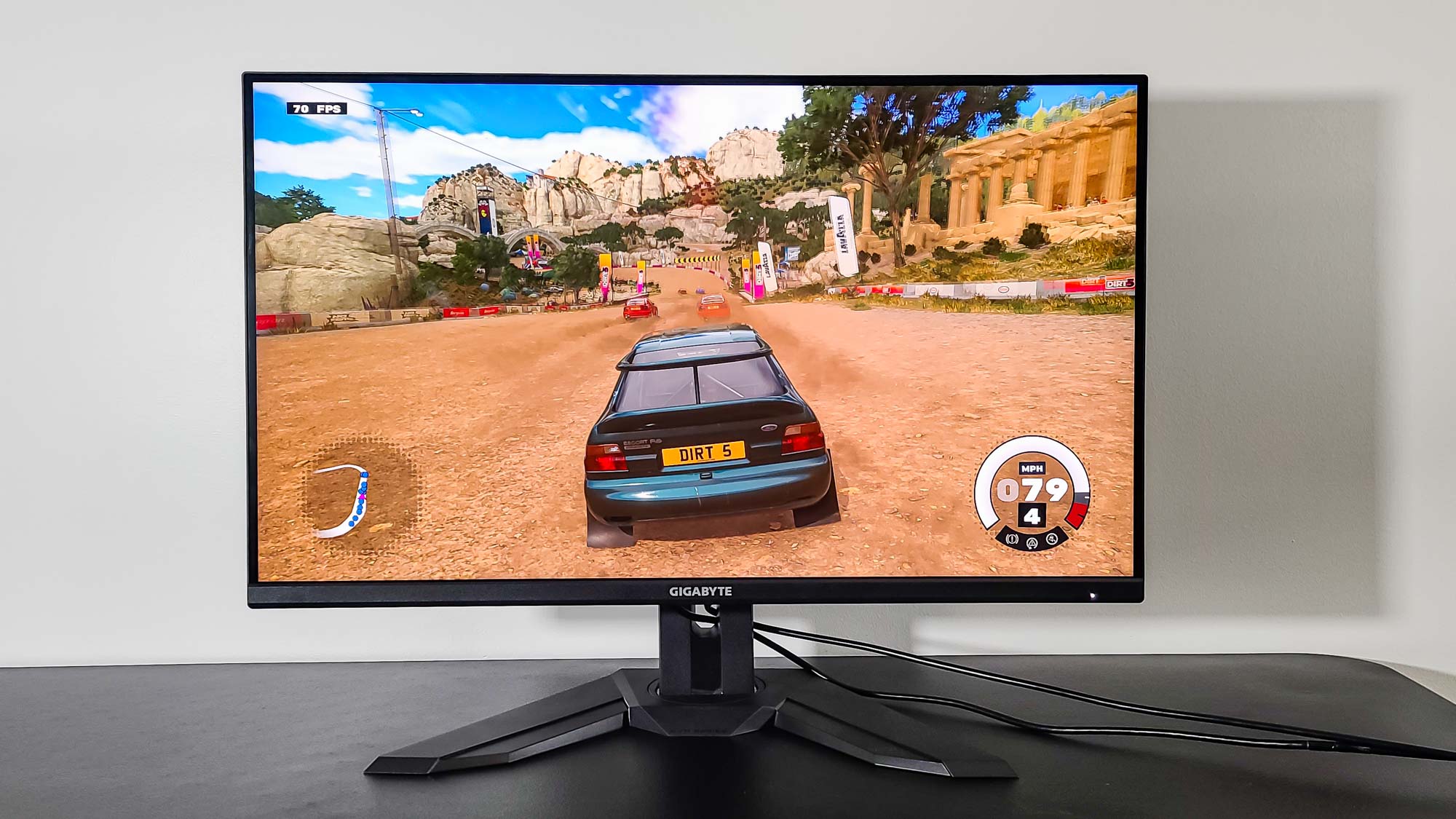
But although the M32U boasts a 144Hz refresh rate (which tops out at 120Hz if you're using information technology with a Sony PlayStation 5 or Microsoft Xbox Series X panel) and a 1ms Motility Picture Response Time (MPRT), some tinkering may be beneficial for getting the best results. In several film modes at their default settings, slight ghosting was visible in frenzied scenes in both Far Cry six and Assassin's Creed Valhalla, and it got a lot worse in the frenzied races of DiRT 5. Adjusting the Overdrive (on the Gaming menu of the on-screen display, run across below) eliminated this, at a marginal sacrifice of speed, so it's an piece of cake trouble to solve, but you lot're best off using the correct mode for your game and experimenting rather than hoping for the all-time. (With no Racing mode, Clay five was going to take trouble at the get-go no affair what.)
The monitor'south integrated speakers go decently loud — if they're not going to milkshake whatever walls, you won't have whatsoever problems hearing anything — just their audio quality is non especially adept. In addition to a full general aural flatness (not uncommon for monitor speakers), there's a hollowness to a lot of game sound; combine these qualities, and the audio can be muddy and borderline disruptive. In one firefight in Far Cry 6, it was tough to tell exactly where the explosions and enemy bullets were coming from, which isn't what you desire. Uncomplicated background music played just fine, simply as well much of the time, using the speakers was like washing your ears with gray. If you don't already have a respectable set of PC speakers or headphones, investing in some would not exist a bad idea.
Gigabyte M32U gaming monitor review: Interface
The on-screen display (OSD) of the M32U provides clearly organized menus of the monitor's myriad settings and information panels; merely click the Power push to open up it. Your first click brings up a basic navigational menu with options for the full Settings, GameAssist (for displaying a mid-screen crosshair and other useful gameplay information), and KVM controls, in improver to Power Off. You tin can also bypass the main menu birthday by clicking the Power button left to change the monitor's volume, downwards to switch picture modes, or right to select a dissimilar input source.
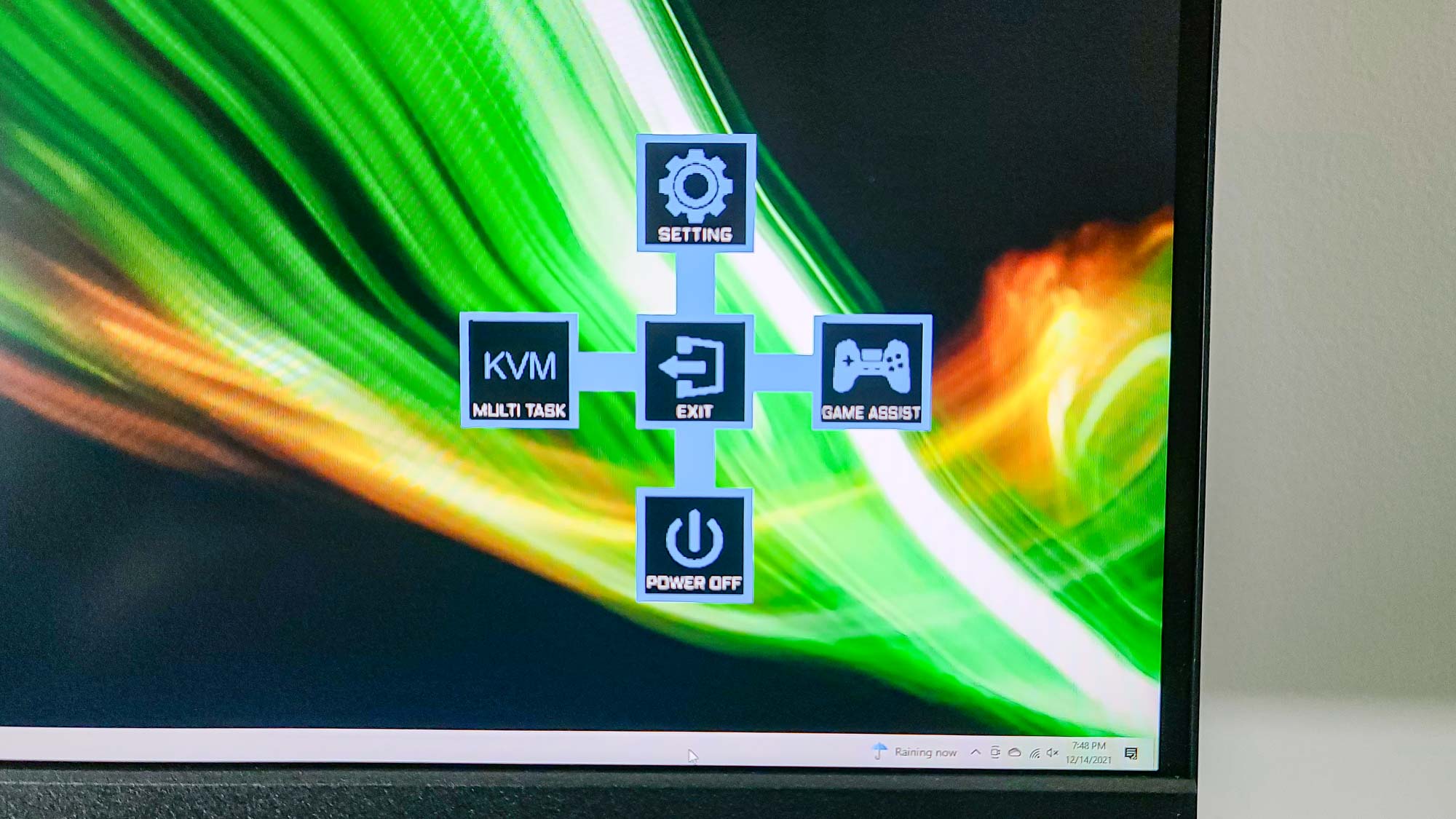
All of the menus are light blue in color, which is less garish (and more than pleasant to read) than the FI32U's all-orange coloration, but nonetheless non equally sophisticated equally you lot'll find on other monitors. Once you get into the main Settings carte, yous'll find it packed, giving yous quick access to picture controls, Film-in-Picture and Film-by-Moving picture (PIP/PBP) functionality, and a ton of standard configuration tweaks ranging from the operating language and OSD display options to major game adjustments.
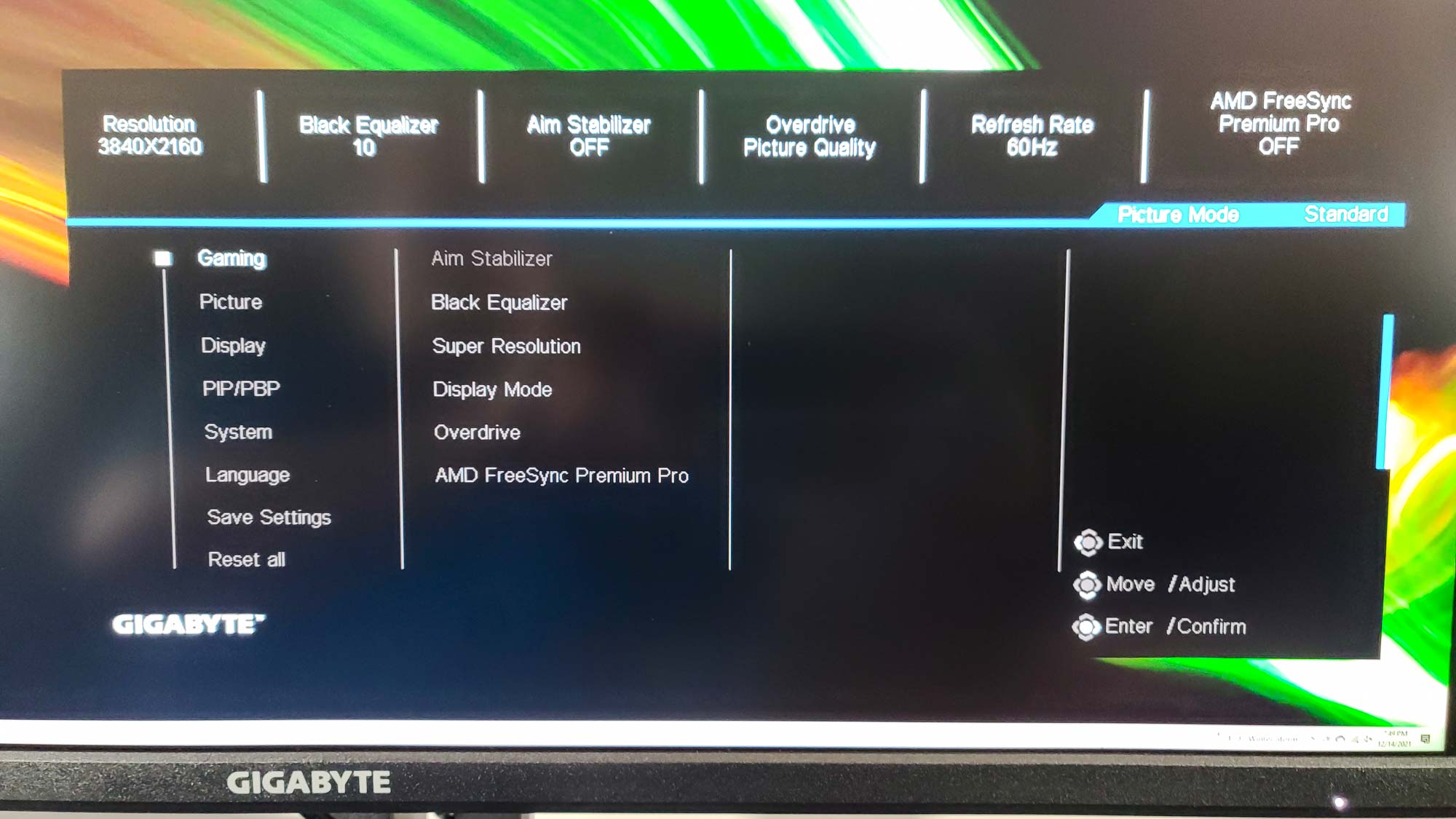
Considering that this is a gaming monitor, it'southward no surprise that in that location's a compensation of those, including Aim Stabilizer (for reducing motion blur); Blackness Equalizer (basically local dimming zones); and AMD FreeSync Premium Pro, which provides Adaptive Sync support for HDR content at up to a 120Hz refresh rate. As with the picture modes, there are three blank settings slots where y'all tin save your configuration so you tin always ensure that the M32U will look exactly the way you want information technology for any given championship.
The but real deviation between the M32U's menus and those on the FI32U is that the latter monitor provides a one-click entrypoint to the Gigabyte Dashboard, for monitoring your computer's vitals via overlay, instead of the KVM options. But in that location's a lot on both monitors, and it's all easy to go into and work with.
Gigabyte M32U gaming monitor review: Verdict
The Gigabyte M32U gaming monitor is near a slam-douse selection, because everything you get as part of the bundle. Gigabyte goes for bankrupt with things similar its congenital-in KVM switch and GameAssist, and those come close to paying off. Add in the well-executed, more than familiar offerings, and this is a monitor that deserves serious thought if you're in the market for what it delivers.
Simply details matter. The M32U's fractionally lower picture quality, the more obvious ghosting with the out-of-the-box flick modes, and the jumbled, distant sound quality from the speakers — they practise add up. The Corsair Xeneon costs the aforementioned amount of money and sports a lower resolution (two,560x1,440) but avoids these problems; and the Dell S3220DGF gaming monitor costs hundreds of dollars less. And if money is, more or less, no result, why non go for the Gigabyte Aorus FI32U, which does just about everything this monitor does — and pairs it with impeccable graphics quality, better-optimized presets, and a splashier blueprint?
Don't misunderstand: The Gigabyte M32U gaming monitor is quite adept, both on its own terms and as a less-expensive alternative to the FI32U. Just proceed in listen what you're getting with it — and what you're not getting with information technology. Chances are it may all the same make real sense.

Source: https://www.tomsguide.com/reviews/gigabyte-m32u-gaming-monitor
Posted by: parnellleguiry1975.blogspot.com
0 Response to "Gigabyte M32U gaming monitor review"
Post a Comment